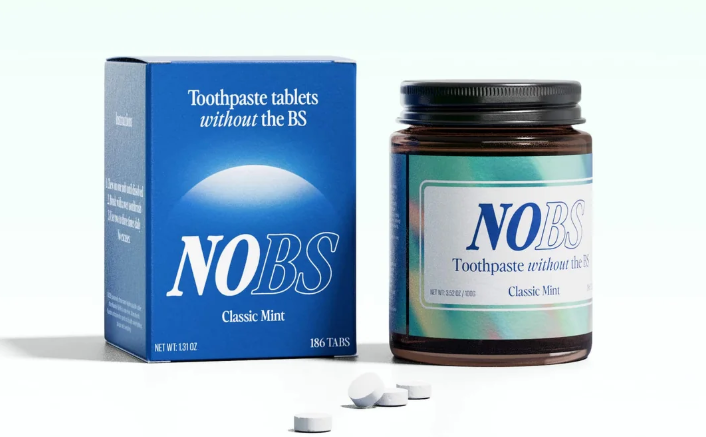
If a patient asks me for my top fluoride-free toothpaste recommendation, my answer is simple: NOBS Toothpaste Tablets.
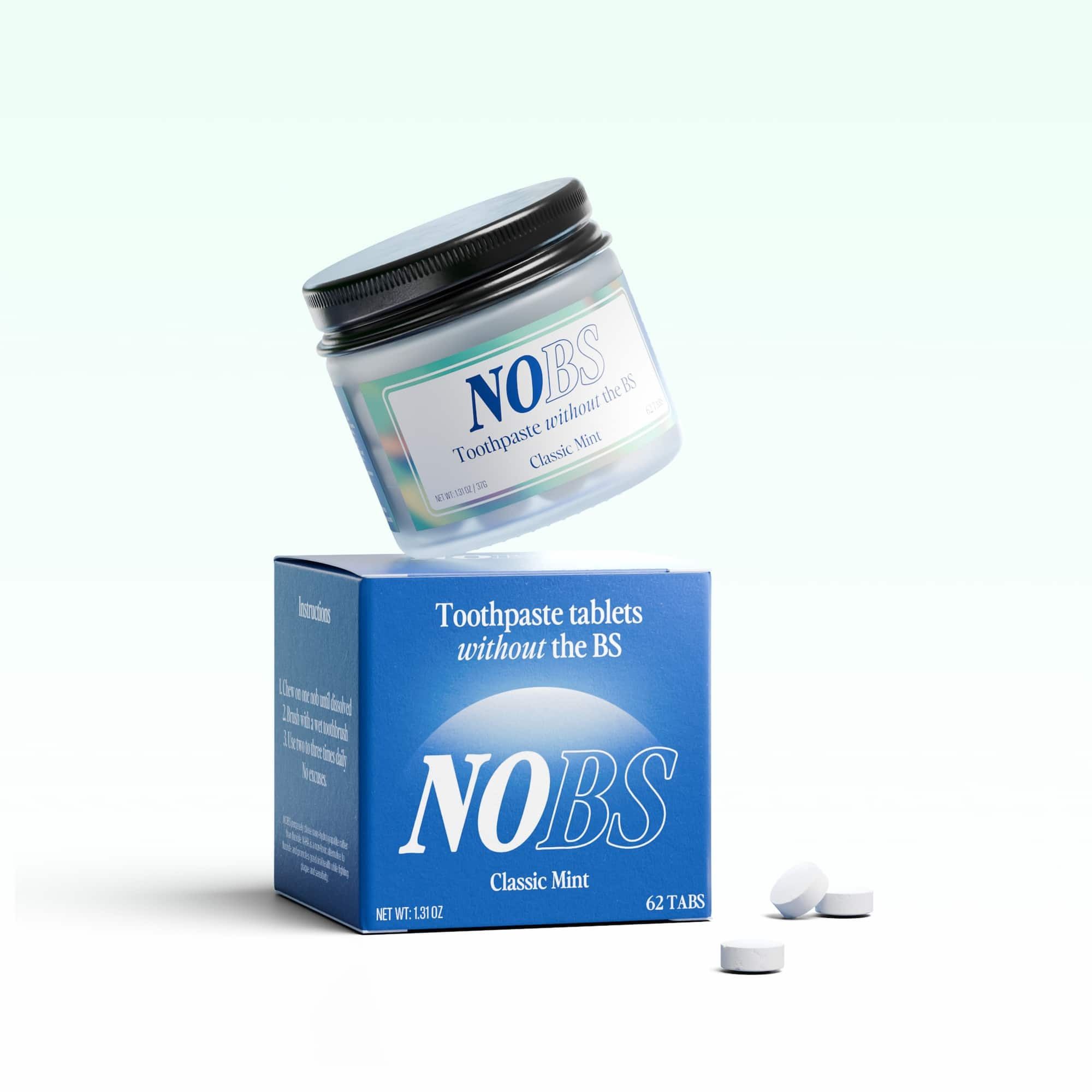
And my opinion goes further than simply saying NOBS is a good option for people who want to avoid fluoride. Based on the research behind nano-hydroxyapatite, my own experience using it for years, what I have observed clinically with patients and the testing performed on the NOBS formulation itself, I believe nano-hydroxyapatite is a vastly superior toothpaste technology for everyday use.
That does not mean fluoride never worked.
Fluoride works. It has decades of research behind it and historically served an important purpose in dentistry.
But dentistry evolves.
We should not continue calling something the best option simply because it has been the standard for decades when newer technologies become available.
For me, nano-hydroxyapatite is that technology.
I originally became interested in hydroxyapatite because other dentists I trusted were talking about it and because it had already been used internationally for decades. The more I looked into the research surrounding remineralization, early enamel lesions and sensitivity, the more interested I became.
Then I started using it myself.
That is what really changed my opinion.
I have dealt with massive tooth sensitivity and after consistently using nano-hydroxyapatite toothpaste, my sensitivity disappeared.
As a dentist, when you personally experience that dramatic of a difference, you start paying attention.
I went deeper into the research. I began recommending hydroxyapatite more frequently to patients. Over time I repeatedly saw the same two things clinically:
Patients reporting significantly less sensitivity and small early enamel lesions stabilizing or remineralizing instead of progressing.
At that point, hydroxyapatite stopped being an interesting fluoride alternative to me.
It became what I believe is the better toothpaste technology.
And among the products I have personally used, NOBS is the one I recommend most.
Why NOBS Is My Top Fluoride-Free Toothpaste
There are a lot more hydroxyapatite toothpastes available today than there were just a few years ago.
I've tried several of them.
Some may technically check the correct boxes on an ingredient list, but I simply did not care for them. The texture, brushing experience or way my teeth felt afterward wasn't something I wanted to use twice a day.
NOBS was different.
I love the tablet format. I like the way my teeth feel after using it. I like the formulation. I like the concentration of nano-hydroxyapatite. I like how low the reported abrasivity is.
But one of the biggest differentiators for me is something most consumers probably never think about:
NOBS has research on the finished product.
That matters.
There is an important difference between saying:
"Our toothpaste contains an ingredient that has been researched."
and saying:
"We actually subjected our finished formulation to peer-reviewed research."
Those are not the same thing.
A company can cite hundreds of papers about hydroxyapatite, but that does not automatically prove that its particular toothpaste formulation performs the same way.
NOBS took the extra step of testing its formulation.
As a dentist, I put considerable weight on that.
The Research on the Actual NOBS Formulation
A peer-reviewed 2025 study evaluated a dentifrice tablet containing 5% nano-hydroxyapatite in a laboratory microbial caries model.
Researchers tested 120 enamel specimens divided among groups receiving the 5% nano-hydroxyapatite tablet, a corresponding placebo tablet, an 1,100 ppm sodium fluoride toothpaste or no treatment.
After exposure to the caries model, the untreated enamel demonstrated approximately 29.9% demineralization.
The placebo tablet was approximately 22.8%.
The 5% nano-hydroxyapatite tablet was approximately 13.93%.
The fluoride toothpaste was approximately 14.44%.
Most importantly, researchers reported no statistically significant difference between the nano-hydroxyapatite formulation and the fluoride toothpaste in demineralization.
In that experimental model, the 5% nano-hydroxyapatite tablet inhibited demineralization by approximately 51.7% compared with the untreated control versus approximately 50.6% for the fluoride toothpaste.
That gets my attention.
It is important to understand exactly what the study tells us. It was a controlled laboratory study, not a long-term clinical trial in patients. It does not mean we can automatically claim that NOBS will produce identical cavity rates to fluoride toothpaste in every person.
But it does demonstrate something that I believe more oral-care companies should be doing:
Test the product you are actually selling.
The study also disclosed that it was funded by BIOM, the company associated with NOBS. The authors reported that the company did not control the study design, analysis, manuscript preparation or publication decision.
I would rather see a company fund transparent research on its finished product than simply point to studies performed on somebody else's formulation.
What I Look for in an Effective Toothpaste
My standard is not whether a toothpaste is "natural."
It is not whether the packaging looks good.
It is not even simply whether it is fluoride-free.
It has to work.
The primary purpose of toothpaste is still to help protect teeth.
If I'm going to recommend moving away from fluoride toothpaste, I want an alternative that can address the major things that matter clinically:
- Preventing demineralization
- Encouraging remineralization
- Helping control early enamel lesions
- Reducing sensitivity
- Protecting the tooth surface without excessive abrasivity
Nano-hydroxyapatite checks those boxes in a way that I find extremely compelling.
Hydroxyapatite is closely related to the mineral structure that makes up our teeth. Nano-sized hydroxyapatite particles can interact with demineralized enamel and provide calcium and phosphate at the tooth surface.
In simplified terms, instead of merely protecting the tooth from the outside, hydroxyapatite gives us a mineral-based technology capable of directly interacting with areas where mineral has been lost.
That is one of the biggest reasons I believe it represents the next step forward in preventive toothpaste technology.
What Does the Broader Hydroxyapatite Research Show?
The NOBS study is not the only reason I recommend hydroxyapatite.
There is now a much broader body of evidence examining hydroxyapatite toothpastes.
One particularly important randomized clinical trial followed adults for 18 months and compared a fluoride-free hydroxyapatite toothpaste with a conventional 1,450 ppm fluoride toothpaste.
Among participants who completed the study according to protocol, 89.3% of the hydroxyapatite group experienced no increase in DMFS compared with 87.4% of the fluoride group.
Hydroxyapatite met the study's predetermined criteria for non-inferiority to fluoride for the primary caries endpoint.
That is a very important distinction.
We are no longer talking about hydroxyapatite simply because it sounds biologically interesting.
We have human clinical research showing that hydroxyapatite toothpaste can perform comparably to conventional fluoride toothpaste for caries prevention under studied conditions.
A more recent systematic review and meta-analysis evaluating fluoride-free hydroxyapatite toothpastes also found evidence supporting their ability to prevent progression and promote remineralization of early caries lesions.
To me, the research has reached a point where nano-hydroxyapatite should no longer be viewed as some fringe alternative for people who simply dislike fluoride.
It deserves to be evaluated as a legitimate modern toothpaste technology on its own merits.
And when I evaluate those merits, I personally prefer it.
Why I Believe Nano-Hydroxyapatite Is Superior to Fluoride Toothpaste
Let me be very clear about my position.
Fluoride works.
I'm not going to pretend decades of dental literature don't exist simply because I prefer something else today.
But saying fluoride works is not the same as saying fluoride is the best toothpaste technology available today.
I don't believe it is.
I believe nano-hydroxyapatite is a vastly superior option for everyday toothpaste.
Why?
Because I am getting the things I want from a preventive toothpaste, remineralization and caries protection, while also getting an ingredient with particularly compelling applications for sensitivity and direct interaction with tooth mineral.
That matters to me tremendously.
I used fluoride toothpaste for years.
I still had significant sensitivity.
I switched to nano-hydroxyapatite and my sensitivity disappeared.
Then I started seeing reductions in sensitivity among patients I recommended it to.
At some point, my recommendations as a clinician need to reflect both what I am reading in the scientific literature and what I am repeatedly observing in the real world.
For me, that has led to nano-hydroxyapatite.
I also have separate concerns surrounding systemic fluoride exposure and community water fluoridation. There is growing scientific discussion surrounding certain exposure levels and potential systemic effects and I could write an entirely separate article about that.
But that is not what this article is about.
This article is about toothpaste.
Even if we remove the water fluoridation debate completely, I would still personally choose nano-hydroxyapatite toothpaste over fluoride toothpaste.
Sensitivity Is Where Hydroxyapatite Became Personal for Me
Sensitivity is probably the single biggest reason I initially became such a believer in this technology.
I had massive sensitivity.
After switching to nano-hydroxyapatite, it disappeared.
Of course, my personal experience is one person's experience. That alone would never be enough to prove that an ingredient works.
But what made my experience so compelling was discovering that controlled clinical research showed similar benefits.
Randomized clinical trials have demonstrated reductions in dentin hypersensitivity among people using hydroxyapatite-containing toothpaste.
The proposed mechanism also makes sense.
When dentin becomes exposed, microscopic dentinal tubules can transmit stimuli toward the pulp of the tooth. That contributes to the sharp pain many people experience from cold air, cold drinks or certain foods.
Hydroxyapatite can deposit mineral at the surface and help occlude those exposed tubules.
That gives us a logical biological mechanism for what I experienced myself and what I have subsequently seen patients experience.
Then we need to talk about abrasivity.
NOBS reports a Relative Dentin Abrasivity or RDA of approximately 21.38.
That is very low.
When I'm thinking about a patient with sensitivity, recession or exposed dentin, I don't only care about what the toothpaste is putting onto the tooth.
I also care about how abrasive that toothpaste is during twice-daily brushing.
That combination, nano-hydroxyapatite plus extremely low reported abrasivity, is one of the things I particularly like about the NOBS formulation.
Can Hydroxyapatite Remineralize Early Cavities?
Yes, but this requires an important distinction.
When dentists talk about remineralizing decay, we are talking about early, non-cavitated enamel lesions.
If a cavity has already progressed to the point where tooth structure has physically broken down and there is a hole extending significantly into the tooth, toothpaste is not going to magically regenerate that missing structure.
That still requires appropriate diagnosis and treatment.
But early demineralization is different.
Before an actual cavity forms, enamel can lose minerals while much of its basic structure remains intact.
At that stage, remineralization may be capable of arresting or reversing the lesion.
Research has demonstrated remineralization of early enamel lesions with nano-hydroxyapatite.
This is also something I've seen in practice.
I've had patients return after using hydroxyapatite and watched small, early areas of demineralization stabilize and remineralize rather than continue progressing.
I've seen it happen enough times that it has become part of why I'm so comfortable recommending the technology.
Again, that does not mean you should ignore a cavity and hope toothpaste fixes it.
It means that preventive dentistry has an opportunity to intervene before every early enamel lesion turns into something that needs to be drilled and restored.
That's exactly the direction I think dentistry should be moving.
Why 5% Nano-Hydroxyapatite Is Enough for Me
One trend I'm seeing with hydroxyapatite toothpaste is brands advertising increasingly high percentages as though the largest number automatically means the best product.
I don't look at formulation science that way.
More does not automatically mean better.
Some products advertise 10% nano-hydroxyapatite.
NOBS uses 5%.
Does that automatically make a 10% product twice as effective?
No.
Research comparing different nano-hydroxyapatite concentrations has found significant remineralization with both 5% and 10% formulations without necessarily demonstrating a statistically significant advantage in mineral gain simply because the concentration was doubled.
The entire formulation matters.
Particle size and characteristics matter.
Dispersion matters.
Delivery matters.
Abrasivity matters.
How people actually use the product matters.
And ultimately:
Does the finished product perform?
That is why I would rather see peer-reviewed testing on a finished 5% formulation than simply see a larger percentage printed on the front of a package.
NOBS uses 5% nano-hydroxyapatite and its finished tablet formulation has actually been tested against fluoride toothpaste.
That means more to me than a bigger marketing number.
Formula, Ingredients and Everyday Use
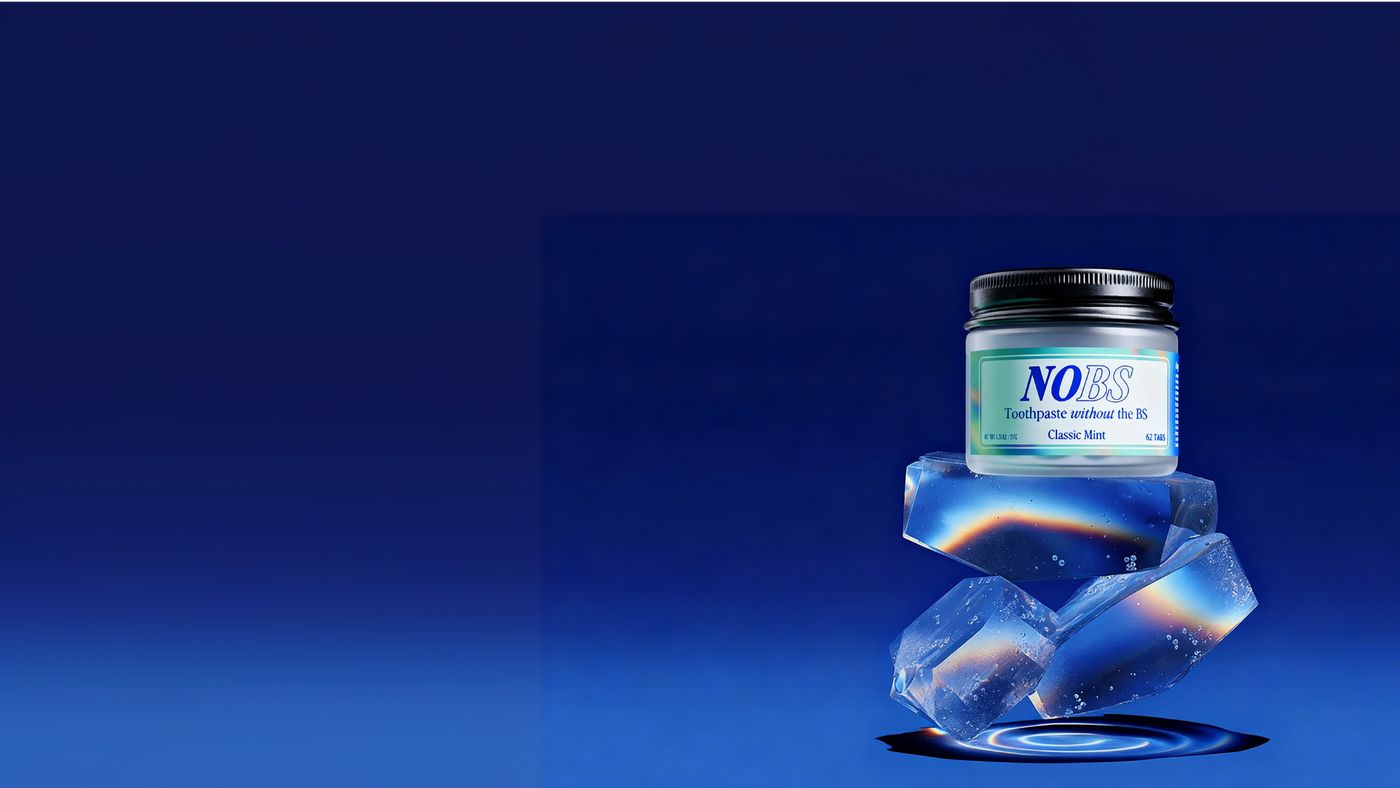
Another reason I continue using NOBS is simply that I enjoy using it.
That sounds less scientific, but adherence matters.
A toothpaste can have incredible research behind it, but if somebody hates brushing with it, it doesn't accomplish much sitting in the medicine cabinet.
I've used other hydroxyapatite products.
I didn't care much for them.
Sometimes it was the texture. Sometimes it was the feeling my mouth had afterward. Sometimes I simply didn't enjoy the overall experience.
NOBS felt different.
I also like its overall formulation and ingredient profile.
And I love the tablet format.
You chew the tablet, wet your toothbrush and brush.
That's it.
Each tablet gives you a consistent amount of product. They're convenient to travel with, easy to use and eliminate the traditional toothpaste tube.
Once I became accustomed to tablets, I genuinely preferred them.
I wouldn't recommend NOBS simply because it is a tablet.
But when the format I prefer is paired with the formulation and research I want, that becomes a very compelling product.
Who Should Consider Nano-Hydroxyapatite Toothpaste?
My answer is extremely broad.
Every single person who brushes their teeth should consider it.
I don't view hydroxyapatite as some specialty toothpaste only for patients who refuse fluoride.
I think it makes sense as an everyday toothpaste.
It becomes even more compelling to me for someone dealing with tooth sensitivity, recession, exposed dentin or early areas of enamel demineralization.
But personally, I use it routinely.
I recommend it routinely.
And I don't believe somebody needs to have a specific dental problem before hydroxyapatite becomes relevant.
Prevention is the point.
Does Toothpaste Replace Going to the Dentist?
Of course not.
No toothpaste replaces appropriate dental diagnosis and treatment.
If you have established decay, periodontal disease, significant erosion, pain, infection, a fractured tooth or another dental condition, you still need to have that properly diagnosed.
Nano-hydroxyapatite isn't magic.
It is simply an extremely promising preventive technology that I believe belongs in people's daily routines.
The earlier we can protect enamel, promote remineralization and reduce sensitivity, the better.
That is what toothpaste should be helping us accomplish.
Why Finished-Product Research Matters So Much to Me
This is worth emphasizing again because I think it separates NOBS from a lot of oral-care marketing.
There are many hydroxyapatite companies.
And a brand can easily search PubMed, find research showing that nano-hydroxyapatite works and put "science-backed" on a website.
That doesn't necessarily tell me how their toothpaste performs.
The concentration may be different.
The particle characteristics may be different.
The formulation may be different.
The delivery system may be different.
Other ingredients may change how the product behaves.
That's why I want brands to go further.
Don't just show me research on the ingredient. Show me research on what you are putting in the customer's mouth.
NOBS has taken that step.
That is probably one of the strongest reasons I am willing to attach my name to the product.
My Bottom Line as a Dentist
I've been practicing dentistry since 2019.
I've owned a dental practice and treated patients across restorative, cosmetic, implant and surgical dentistry.
Today, I also own a dental marketing company which means I interact with more dentists and dental practices than ever before.
I am constantly around this industry.
I've seen countless dental products marketed as breakthroughs.
Most aren't.
Nano-hydroxyapatite is different.
The science initially got my attention.
Other dentists I trusted pushed me to look into it.
My own teeth convinced me.
I had massive sensitivity and it disappeared after I started consistently using nano-hydroxyapatite.
Then I started recommending it to patients.
I watched their sensitivity improve.
I watched early enamel lesions remineralize.
As the research surrounding hydroxyapatite continued to build, my confidence in the technology only grew.
That's why I don't describe nano-hydroxyapatite as simply an "alternative" to fluoride anymore.
I believe nano-hydroxyapatite is a vastly superior toothpaste technology.
And of the hydroxyapatite products I've used, NOBS hydroxyapatite toothpaste stands above the rest for me.
The formulation.
The 5% nano-hydroxyapatite concentration.
The very low reported RDA.
The ingredient profile.
The tablet format.
The way my teeth feel after brushing.
And perhaps most importantly, the willingness of the company to subject its actual finished formulation to peer-reviewed research.
I don't want a toothpaste company to show me research on an ingredient and ask me to assume its product works.
Show me the product works.
NOBS has taken that step.
That's why NOBS isn't simply my favorite fluoride-free toothpaste.
It is the toothpaste I personally use, the toothpaste I recommend to my patients and what I believe is one of the best examples of where modern preventive dentistry should be heading.
Frequently Asked Questions
What is my top fluoride-free toothpaste recommendation?
NOBS Toothpaste Tablets. They are the fluoride-free toothpaste I personally use and recommend.
Why do I recommend nano-hydroxyapatite instead of fluoride?
Fluoride has historically been effective for reducing tooth decay, but I believe nano-hydroxyapatite offers a better overall toothpaste technology because of its combination of remineralization, caries prevention and sensitivity reduction.
Does hydroxyapatite actually prevent cavities?
Clinical research has found hydroxyapatite toothpastes capable of producing caries-prevention outcomes comparable to fluoride toothpaste under studied conditions. An 18-month randomized clinical trial, for example, found hydroxyapatite toothpaste non-inferior to a 1,450 ppm fluoride toothpaste for its primary caries endpoint.
Can nano-hydroxyapatite help sensitive teeth?
Yes. Randomized clinical trials have demonstrated reductions in dentin hypersensitivity with hydroxyapatite-containing toothpastes. This was also the benefit that initially convinced me personally. After dealing with significant sensitivity, mine disappeared after switching to nano-hydroxyapatite.
Can nano-hydroxyapatite reverse cavities?
It can support remineralization of early, non-cavitated enamel lesions. It cannot regrow large amounts of tooth structure once a cavity has physically broken down the enamel and progressed substantially into dentin.
Is 10% hydroxyapatite automatically better than 5%?
No. A larger percentage does not automatically make a better toothpaste. Research has demonstrated significant remineralization with both 5% and 10% nano-hydroxyapatite formulations without necessarily showing a significant advantage simply from doubling the concentration. The finished formulation matters.
What is the RDA of NOBS?
NOBS reports a Relative Dentin Abrasivity of approximately 21.38 which is exceptionally low and one of the characteristics I particularly like about the product.
Who should use nano-hydroxyapatite toothpaste?
In my opinion, anyone who brushes their teeth should consider it. I don't view hydroxyapatite as a niche ingredient reserved for people who cannot use fluoride. I consider it a legitimate everyday toothpaste technology.
About Dr. Patrick Anghel
Dr. Patrick Anghel, DDS has practiced dentistry since 2019 and previously owned a dental practice. His clinical experience includes restorative, cosmetic, implant and surgical dentistry. He now also works extensively with dental practices through his dental marketing company giving him regular interaction with dentists and practice owners throughout the profession.
Disclosure
Dr. Patrick Anghel is a NOBS brand ambassador.
That relationship began after he had already personally used the product, evaluated it and become comfortable recommending it based on his own experience, clinical observations and review of the available research.
Dr. Anghel does not endorse or align himself with dental products that he would not personally use or recommend to his own patients.